
Latest
The supply situation continues to worsen
Supply shortages and rising prices are on the rise. Early demand planning is now becoming increasingly important.
As of August 2026
What was already becoming apparent in the spring has now become a reality: Supply pressures in the electronics market continue to rise. Prices and lead times are increasing significantly, particularly for printed circuit boards. The memory market also remains tight, while other component groups are increasingly affected by price increases. We would like to take this opportunity to once again inform you about the significant worsening of the supply situation for printed circuit boards and memory and to highlight where action is now needed to ensure your ability to deliver.
The situation regarding printed circuit boards remains tense
Particularly with regard to printed circuit boards, we are currently seeing a trend that could increasingly affect prices and delivery times—and thus also existing customer orders and framework agreements—in the coming months. The shortage now affects not only specialty materials but also base materials for traditional industrial printed circuit boards (FR4).
Current market data for printed circuit boards:
- Spot prices for standard FR4 laminate in China have roughly tripled within 12 months
- Copper-clad base material has risen in price by about 75% within a year
- Since April 2026, laminate manufacturers have cumulatively raised their prices by about 50% in several steps
- Delivery times for high-quality PCB materials are already up to 28 weeks, while for standard FR4 they are about four weeks (instead of just a few days)
- Manufacturers are beginning to allocate available material quantities. In some cases, the available quantity is based on the purchase volumes of the previous year
- Fiberglass fabric, copper foil, as well as resins and bonding materials used to assemble multilayer printed circuit boards have become particularly scarce
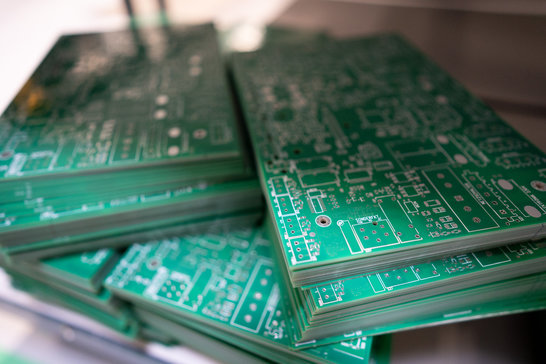
The main driver is the rapidly growing AI and data center industry. Production and material capacities are being used primarily for highly complex, higher-margin printed circuit boards. We have already been noticing this trend in our procurement since the beginning of the year, particularly in the sharply rising delivery times in some cases. At the same time, due to market dynamics, we can no longer rule out price increases for printed circuit boards. Our PCB partner KSG also confirms this trend.
“The AI boom is acting as a catalyst for the already strained supply situation for printed circuit board materials. AI servers require many times more printed circuit boards than conventional applications. This is driving up demand for high-quality laminates and copper foils—resulting in rising prices and longer lead times.”
The Future Trend
The memory market remains tight
The memory market also remains a significant risk factor. Older memory technologies in particular are becoming increasingly scarce due to shifts in production capacity. For SLC NAND, price increases of 120–170% are forecast for the second half of 2026 compared to the first half. We manage the procurement of the memory we use through forecasts and early demand planning.
Trends in Electronic Components
In addition to printed circuit boards and memory, we are now also observing a clear upward price trend in numerous other component groups.Price adjustments are increasingly being announced across a broad spectrum, e.g., for relays, connectors, electrolytic capacitors, and other active and passive components. Delivery times in these product groups are currently still largely stable, but the price trend is clearly pointing upward. Particularly striking are the frequency and short notice of the price adjustments. In some cases, existing terms are being reassessed, which means that ongoing agreements or contracts may also be affected by price changes. We expect that cost pressures in the coming months will not be limited to printed circuit boards and memory modules.

What you can do specifically
Please plan your requirements for electronic assemblies for the next six to twelve months as early as possible and, ideally, coordinate directly with us.
We recommend that you do not wait until the actual call-off date to notify us of planned quantities. The sooner we know the quantities you need, the better we can secure quantities and materials, respond to increasing lead times, and thus avoid short-term bottlenecks and provide transparency regarding additional costs at an early stage.
We’re happy to assist you with your planning and coordinate with you for the coming months.