
Latest
Printed Circuit Board Market Under Pressure
The global expansion of AI infrastructure is currently fundamentally transforming the electronics market and causing prices and delivery times to rise further.
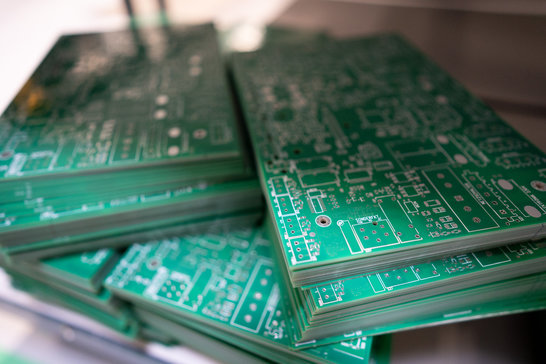
Rising raw material prices, growing demand for specialized materials, and geopolitical developments are causing printed circuit board materials to become more expensive and leading to longer delivery times for many standard printed circuit boards. This is now having a direct impact on companies that develop and manufacture industrial electronics, medical technology, and machine control systems.
Demand for AI hardware is transforming the entire market
The demand for high-performance servers for artificial intelligence applications is growing rapidly worldwide. Their manufacture requires enormous quantities of copper, glass fabric, and specialized printed circuit board materials. This is precisely where the problem lies: Many manufacturers are increasingly focusing their production capacities on high-quality, high-speed materials for AI applications.
As a result, less production capacity is available for standard printed circuit boards. This leads to longer lead times and limited availability of key materials. Suppliers are already reporting shortages of various copper foils, prepregs (reinforcement materials), and standard laminates. At the same time, lead times for numerous standard materials are increasing significantly.

Prices are rising, and delivery times are getting longer
The effects are now clearly evident. International market reports indicate price increases of up to 40 percent for printed circuit board materials within just a few weeks. At the same time, the costs of copper foil and other base materials are rising steadily.
Further price adjustments are already expected in the coming months. At the same time, delivery times for many printed circuit board manufacturers are getting longer. Since production capacity is increasingly being reserved for AI applications and certain materials are in short supply, delivery dates are sometimes being pushed back by several weeks.
Our suppliers are also observing this trend. Several European printed circuit board manufacturers have already announced further price increases. At the same time, it is becoming increasingly difficult to reach long-term agreements on prices or quantities. Many manufacturers can now only commit to prices and delivery dates on a short-term basis, as they must continually adjust their production to current material availability.
In addition, geopolitical developments are straining the supply of raw materials. Suppliers report, among other things, limited availability of epoxy resins, rising copper prices, and export restrictions on glass fabric. These factors are exacerbating the already high pressure on the entire supply chain and are further driving up costs and extending delivery times.

It's not just printed circuit boards that are affected
However, the current trend is not limited to printed circuit boards. Increasing shortages and longer lead times are also becoming apparent for key electronic components.
MLCC Capacitors: Capacity Shortages Are Increasing
This trend is particularly evident with MLCC capacitors (multi-layer ceramic capacitors). Rising demand from AI data centers and the e-mobility sector is tying up significant manufacturing capacity. AI servers require about 10 to 15 times as many MLCCs as conventional servers, while electric vehicles require about six times as many as vehicles with internal combustion engines.
High-voltage and high-capacity types are particularly affected. Their production is significantly more complex, as the manufacturing cycles are about twice as long as those for standard types. At the same time, the yield is only around 50 percent. Market observers therefore expect the supply situation to continue to worsen over the course of the year and to reach its preliminary peak in the fourth quarter of 2026. Based on current information, a noticeable easing of the situation is not expected until the second half of 2027 at the earliest.
MOSFETs: Take Early Signs Seriously
Here, too, there are currently no serious capacity bottlenecks. Nevertheless, the first warning signs are emerging. On the one hand, manufacturers are observing increasing strain at the wafer and chip levels, which—if the situation worsens further—could also affect downstream manufacturing stages. On the other hand, several suppliers are already announcing price increases and, at the same time, reporting extended delivery times.
Orders placed today may therefore be subject to longer wait times in the future than has been the case so far. Even though the supply situation still appears stable at present, it is advisable to take this development into account early on in project and procurement planning.
What can companies do now?
Even though market trends cannot be influenced, companies can significantly reduce their project risk:
1) Start projects early
The sooner printed circuit boards are ordered or development approvals are granted, the greater the flexibility in material selection, production planning, and delivery dates.
2) Allow for material alternatives
Not every product must necessarily be built on a specific base material. Equivalent alternatives are often available.
Considering these alternatives early in the development phase creates greater flexibility in procurement and helps avoid bottlenecks.
3) Plan production volumes early
If it’s clear what quantities will be needed in the coming months, materials and manufacturing capacity can be reserved early on.
This increases planning reliability and reduces the risk of last-minute delays.
4) Involve development partners early
Especially for new projects, it’s worthwhile to start the dialogue as early as the concept phase.
This allows material availability, PCB design, and procurement strategy to be optimized collaboratively before supply bottlenecks or price increases become a problem.
Current developments show just how closely global technology trends and industrial electronics manufacturing are now intertwined.
Rising prices and longer lead times will increasingly affect companies in the coming months.
Those who coordinate procurement, development, and production planning early on create the necessary flexibility and significantly reduce the risk of price increases, delivery delays, and project postponements.